Just because amp sims are convenient to use doesn’t mean they’re an easy purchase. You still need to apply the same level of scrutiny you apply when buying regular gear. In this post, we’ll check out some of the best amp simulator plugins to help you find one that’s good enough to join your virtual rig. Let’s dive in!
The Top 5 Best Amp Simulator Plugins

Helix Native can be intimidating at first glance, but it’s an incredibly powerful simulator. Line 6 brings the same top-tier accuracy of the Helix modeling family to the plugin system. For one, you have models from Line 6 originals, like crunch-toned Ventoux. However, you’ll also find picks based on classic and modern amps from other manufacturers. For instance, the WhoWatt 100 is modeled after the Hiwatt DR 103.
One huge plus here is the tonal consistency between recording and live performances. Line 6 offers seamless compatibility between Helix Native and other lineup products. This way, you can customize amps on the plugin in the comfort of your studio, save them as presets, and then take them to the stage using the Helix Floor.
Pros
- HX modeling tech captures tricky effects like the Germanium fuzz
- Fantastic selection of amps and cabinets
- Effortless preset sharing within the Helix ecosystem
Cons
- Investing in a Line 6 Helix setup is expensive
- Risk of option paralysis from the feature-loaded interface
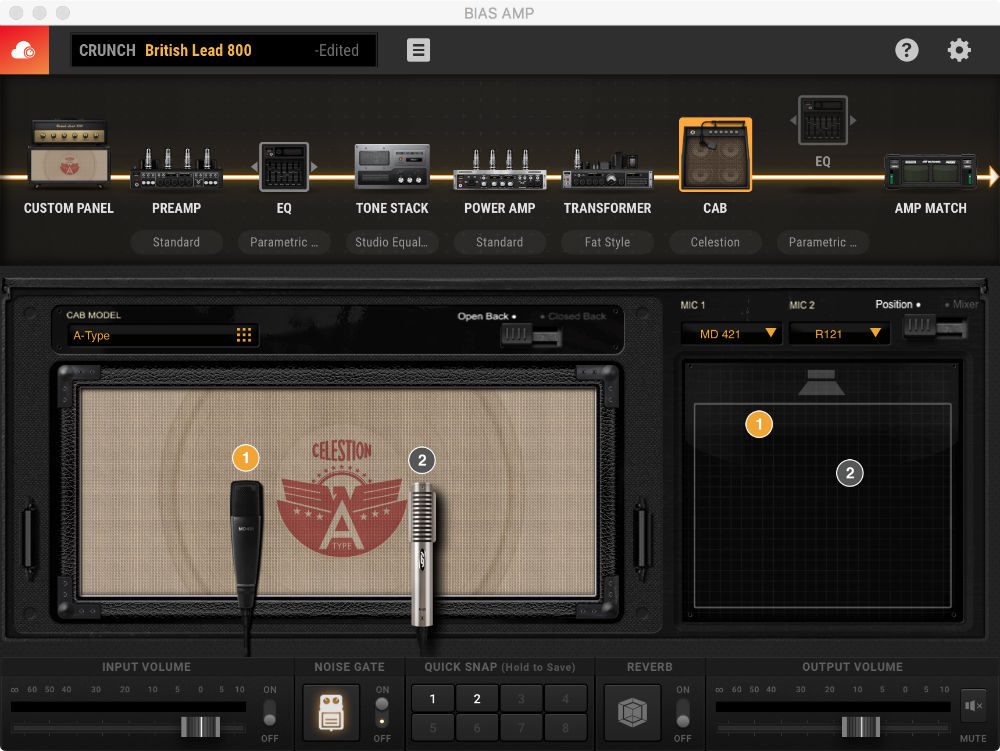
The second release of Bias Amp features emulations of iconic hardware, like the Matchless DC-30 to the Hiwatt DR 103. However, the plugin shines as a virtual amp designer. You can use it to mix and match tubes, tone stacks, cabinets, and even transformers to create a custom amp.
Those who don’t have the time to test different components can use the Amp Match feature to recreate the tonal palette of an imported audio sample. If you don’t have samples, you could resort to Positive Grid’s ToneCloud for inspiration. There, you’ll find 100 presets (10–15 in each category: bass, crunch, blue, etc.) from a bunch of bands from all around the world. Think Van Halen and ZZ Top.
Pros
- Dynamic tube engine customization features make the plugin suitable for different styles
- Exclusive access to Celestation Classics cabinet IRs
- You can refine a track before uploading it to Amp Match to get even closer to the tone you’re looking for
Cons
- Amp designing features can be overwhelming initially
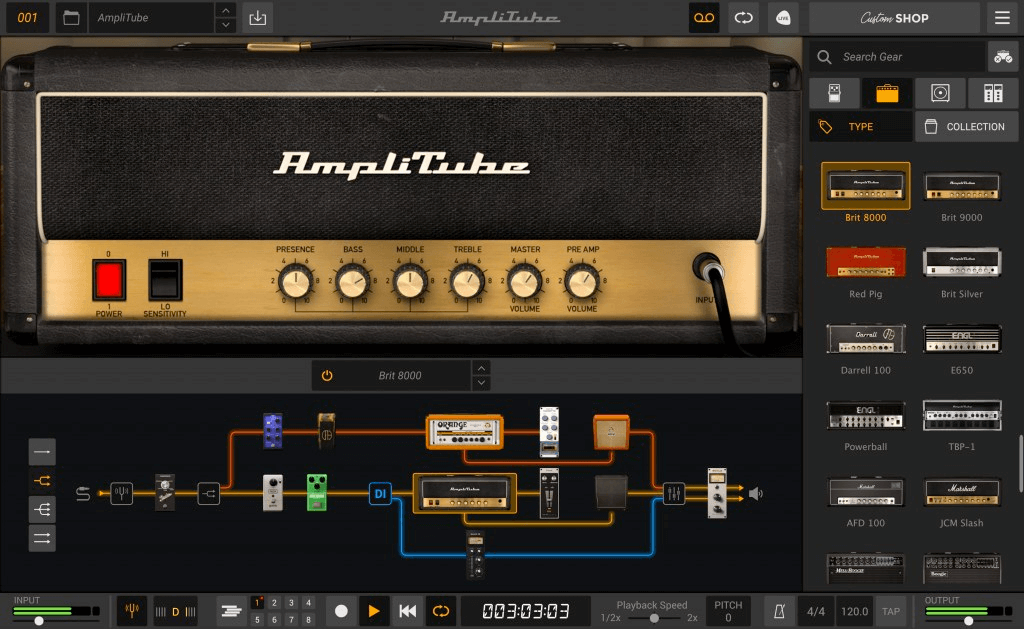
IK Multimedia offers a free, expandable guitar amp and FX simulator/ That would be the AmpliTube 5 CS with its 41 models. However, the 8-track recorder Max version is the best pick in the lineup despite being the most expensive.
The maxed-out version boasts more than 430 gear models between amps, stompboxes, cabs, mics, and so on. Of course, it’s also possible to download other users’ presets from ToneNET instead of stacking components yourself.
Either way, you’ll have the top panel for tweaking the equipment. Meanwhile, the right-hand panel is where you can browse the gear selection. Then, you can view the chain on the base panel at the bottom of the UI, which is sleeker and more powerful than the previous release and supports up to 57 simultaneous FX models.
Pros
- Comprehensive selection gives you limitless possibilities in your virtual rig
- Super Looper tool lets you record two tracks at once
- Hyper-realistic UI for a better experience
Cons
- Though the UI is realistic, it is slightly clunky

Rather than flood the Studio One stock plugin with models, PreSonus went for a few polished choices. So, they used the same tech in their famous Fat Channel analog-emulator plugins in Amipre’s virtual circuitry. If you want high gain, the classic MCM800 or the Dual Amplifier would be the way to go. Besides those two, there are picks for American cleans, ‘70s British leads, and in-your-face bass.
Stompbox emulations, on the other hand, are powered by State Space Modeling tech that keeps the tones as vibrant as possible for this price tag. But, this mainly applies to five of the 13 included stompboxes (Big Fuzz distortion, ‘80s FAT, MP Ninety phase-shifter, 4-in-1 PAE Chorus, and the overdrive Tube Dreamer pedal).
Pros
- Ideal for DI recording
- Simple and clutter-free interface
- Included in the Studio One+ package
Cons
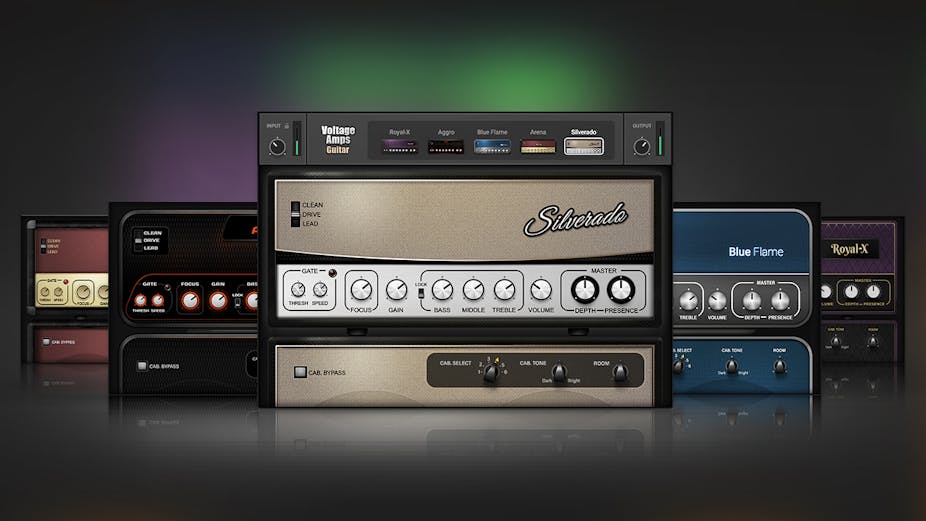
With a simplistic interface and a budget-friendly price tag, Voltage Amps is a great pick for beginners. Yet, it’s still a powerful simulator. For one, it has over 400 presets, many of which were created by famous artists, including Nirvana’s Butch Vig and the Grammy winner Jeff Ellis.
The first guitar amp on the list is Royal-X, suitable for the late ‘90s to modern-day sounds. Next in line are the aggressive Arrgo, the ‘80s Blue Flame, and the stadium-rock-suitable Arena. Finally, we have the versatile Silverado. But regardless of which amp you choose, the controls are going to be the same.
Pros
- Affordable price point
- “Focus” tool for matching the simulator’s performance to your gear
- Shallow learning curve thanks to the unified control layout
Cons
- Limited amp selection with no stomp boxes